 Skip to content



Are you in the process of purchasing LED displays for conference rooms, broadcast studios, monitoring rooms, or commercial spaces?
However, faced with the multitude of brands, packaging technologies, and product specifications on the market, many procurement professionals tend to focus solely on price or pixel pitch, overlooking key factors that impact the long-term user experience.
In fact, an LED display typically needs to operate continuously for 5 to 10 years. Industry data shows that unexpected maintenance and downtime cost enterprises up to 30% more than the initial procurement investment over a five-year lifecycle. Therefore, when making a purchase, it is essential to not only consider the initial investment but also comprehensively evaluate image quality, reliability, maintenance costs, and total cost of ownership (TCO).
So how can we avoid these problems? The answer is: focus on the factors that truly affect long-term use when making purchases.
Based on our own project experience and industry data, this guide outlines the 10 most important factors to consider when purchasing COB or fine-pitch LED displays, helping you select the solution that best meets your business needs.

1. Define the Application Scenarios of the Display Screen
Before purchasing an LED display screen, it’s important to first define the scenarios in which the product will be used, as different environments have significantly different requirements for resolution, brightness, reliability, and maintenance methods.
For example:
| Application scenarios | Recommended pixel pitch |
|---|---|
| Corporate meeting room | P1.2 – P1.8 |
| Command Center | P0.9 – P1.2 |
| Exhibition halls and museums | P1.2 – P1.5 |
| Broadcast and television studio | P0.9 or finer |
| Commercial Display | P1.5 – P2.5 |
Generally speaking, the closer the viewing distance, the smaller the pixel pitch should be to ensure that the image is delicate and does not have obvious graininess.
The first step in procurement: Determine the application scenario first, then the specifications. Viewing distance determines pixel pitch, and the scenario determines the reliability level.
2. COB Technology: 90% Improved Reliability
Currently, the fine-pitch LED market primarily uses three packaging technologies:
- SMD (Surface Mount Device): Mature technology, low cost, suitable for most commercial projects.
- COB (Chip on Board): Impact-resistant, dustproof and moisture-proof, suitable for small-pitch and high-reliability applications.
- MIP (Micro LED in Package): A newer packaging approach, used in some high-end products, but the market is still developing.
Among them, COB technology has developed rapidly in recent years and is increasingly widely used in high-end small-pitch products.
Compared to traditional SMD, COB has the following advantages:
- Better impact resistance
- Higher dust and moisture resistance
- Lower risk of LED chip detachment
- More suitable for small-pitch products
- Higher long-term stability
This means that in humid areas or coastal areas with high salt spray, the COB encapsulation protects the chip from oxidation, resulting in a significantly lower failure rate (failure rate) compared to traditional screens. Furthermore, due to its encapsulation method, the COB screen surface is hard, allowing it to be wiped directly with a cloth and even withstands a certain amount of pushing and impact, greatly reducing the frequency of after-sales repairs.
If your project is a government command center, a high-end corporate conference room, a studio, or an exhibition, and you have a sufficient budget, COB is a perfect investment. The premium feel, ultra-low failure rate, and comfortable visual experience it provides are unmatched by traditional SMD.
As demands increase, many scenarios require pitches of P0.9 or even smaller, leading to the development of MIP (Micro-In-Package) technology, which can easily achieve P0.9 or even smaller. However, because the market has not yet achieved full-scale production, its overall cost (especially due to the added independent micro-packaging step) still carries a premium. Currently, MIP screens with the same pitch are more expensive than COB screens, COB remaining the most dominant in the P0.9–P1.5 range.
However, since COB (Chip-on-Board) technology is highly dependent on the manufacturer’s calibration technology, it is recommended to prioritize manufacturers with point-by-point calibration capabilities. In the section on color consistency below, I will explain why this technology is used and why it is important to choose the right supplier.

COB LED Display: Waterproof, dustproof, collision-proof
3. Image Quality Metrics: Refresh Rate and Color Consistency
Brightness: 600–1200 nits is generally sufficient for indoor use; excessively high brightness may affect comfort.
Refresh Rate: 3840Hz or higher is recommended. For photography and videography projects, many opt for even higher refresh rates, such as 7680Hz.
Gray Scale: High grayscale helps with shadow detail and gradation. Higher grayscale levels result in smoother color changes, but also increase the price.
For example, achieving a top-tier driver IC with 16-bit high grayscale and high refresh rate requires an upgrade to the entire hardware system. Each bit increase in grayscale increases the data volume exponentially (powers of 2). Therefore, processing high grayscale data requires a higher-spec receiver card and greater bandwidth, meaning the entire internal control hardware must be upgraded, directly increasing the total hardware cost. The price of a single chip may double or even more.
If you don’t want to exceed your budget or waste performance, then 13-14 bit resolution is currently the most budget-friendly option on the market, balancing performance and cost.
Color Consistency: Avoids color shifts in different areas.
Contrast Ratio: Simply put, it’s the core indicator of how pure the blacks are and how bright the whites are.
In the fine-pitch market, COB/MIP are natural “high contrast” kings, typically achieving contrast ratios of 10,000:1 or even higher. SMD, while inferior to COB, generally has a contrast ratio between 3,000:1 and 5,000:1.
When projecting PPTs in a meeting room or playing night scenes, movies, or dark-toned content, high contrast makes black text on white backgrounds or fine lines clearly defined, ensuring the text isn’t blurry even when the audience is seated far away.
If possible, request mature project case studies or video links from the manufacturer. It’s best to observe the video and images on-site, rather than just looking at static images.

Comparison of different brightness and grayscale levels
4. Screen flatness and splicing
Fine-pitch screens require a high degree of flatness.
Uneven splicing can lead to problems such as noticeable seams, inconsistent light reflection, and image distortion.
Therefore, when purchasing, it’s advisable to understand the material and manufacturing process of the cabinet, as well as the installation method. These factors directly affect the final display effect. Your wall should appear as a single, seamless digital canvas, with a complete and unbroken image, not a patchwork of cubes.
5. Focus on Power Supply and Thermal Management
Heat kills LEDs. LED displays typically operate for extended periods, so power supply and thermal management design are critical.
Conventional SMD screens generate significant heat, often requiring a 50 cm–80 cm ventilation channel behind the screen or the installation of industrial air conditioning in the server room. If ventilation is inadequate, heat can easily accumulate inside the LED chips, leading to resin aging, yellowing, and even chip detachment.
Today, high-end fine-pitch displays (especially COB screens) commonly use common-cathode low-voltage power supply. This reduces power consumption by 20%–30%, generates less heat, and allows for installation flush against the wall (fully front-accessible maintenance), saving valuable room space. Although energy-efficient power supplies have slightly higher upfront costs, they help reduce electricity and cooling costs over the long term.
For large-area screens, we recommend prioritizing “common-cathode power supply (energy-saving)” technology. Although the initial purchase cost is slightly higher, excessive heat generation in large screens not only causes air conditioning electricity bills to skyrocket, but also leads to color unevenness (thermal color shift) over time due to temperature differences between the center and edges of the screen.
6. Front-maintenance: Repairs completed in seconds
Maintenance methods determine long-term operating costs. When purchasing, one should not only consider installation but also how to maintain the equipment over the next few years.
The maintenance model determines operating costs. Rear-mounted maintenance cabinets not only waste space but also require reserved maintenance space behind the wall.
A front-maintenance, magnetic modular design should be chosen. Technicians can use vacuum suction tools to remove faulty modules from the front in seconds without disassembling adjacent cabinets. Front maintenance not only significantly reduces downtime but also eliminates the need for complex wall reconstruction.
7. Determine if your control system meets your needs
An LED display is more than just a screen; it includes the entire control system.
A control system that supports HDR, 4K/8K, multi-window, and multi-signal source means your display is compatible with video conferencing and automation control, and expands as network bandwidth upgrades. You won’t need to rebuild the system every few years.
8. Assessing Brand and Supplier Strength
An excellent LED display system depends not only on the product itself but also on the supplier’s service capabilities.
Hardware failures often occur without warning; response speed determines your recovery speed. Avoid purchasing from dealers who merely resell products. Instead, partner with manufacturers or system integrators, as these suppliers typically maintain inventory of spare modules, power supplies, and receiver cards at their factories or locally. Furthermore, manufacturers typically include a certain percentage of spare parts with your order to ensure the system’s reliability and continuity of operation. Even if they cannot immediately dispatch technicians to the site to resolve a failure, they have experienced engineers who can provide remote support. This ensures a rapid response in the event of a failure.
Choosing a supplier with inventory and engineers means that problems can be resolved in the shortest possible time. You no longer need to worry about business disruptions while waiting for repairs.
9. Don’t just compare purchase prices; focus on the TCO
Hardware prices are just the tip of the iceberg. Installation, energy consumption, maintenance, and downtime losses are the long-term costs. Based on our customer feedback and industry reports, when calculating the TCO of an LED screen over three to five years, you’ll find that high-reliability displays are actually more cost-effective.
When purchasing LED displays, consider the total cost over their entire lifecycle.
This includes:
- Initial purchase cost
- Installation cost
- Operating costs (electricity, maintenance, etc.)
- Product lifespan
The lowest-priced product doesn’t necessarily have the lowest long-term cost.
While high-reliability products may have higher initial investments, they may be more economical in the long run.
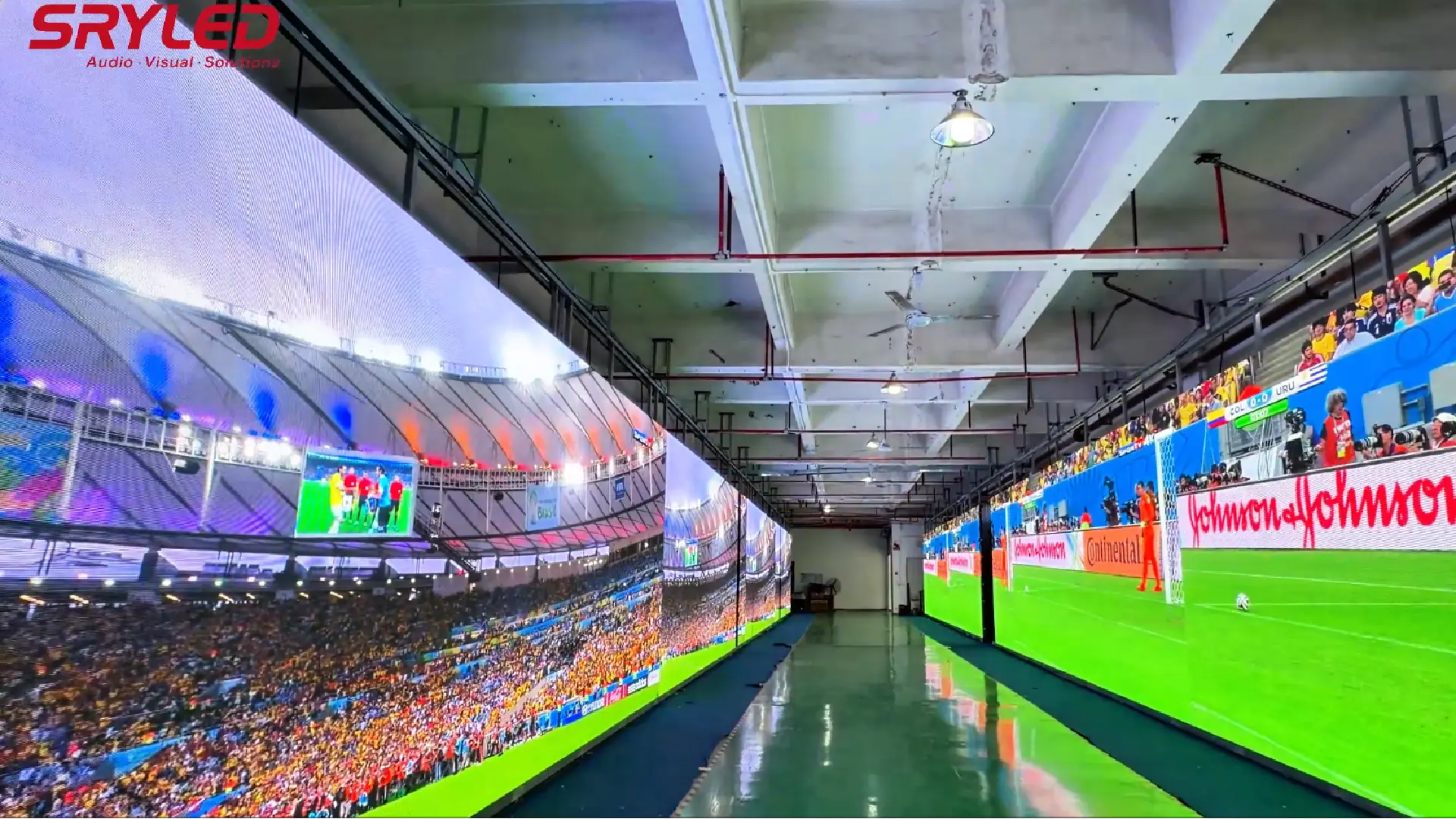
Manufacturer is conducting screen aging tests.
10. Factory Testing: Stable Upon Delivery
Complete acceptance testing should be conducted before project delivery.
Most suppliers, including us, typically conduct a 72-hour aging test on their products before delivery to ensure there are no dead pixels, color shifts, or power supply issues. We also test the product’s long-term operational stability, video playback smoothness, and control system functionality to verify product stability. This gives you peace of mind during acceptance and avoids future risks.
Summary
COB LED displays and fine-pitch LED displays have become important development directions in the high-end display market. However, purchasing an excellent LED display is not simply about choosing a smaller pixel pitch or a higher resolution.
What truly matters is the product’s overall performance throughout its entire lifecycle, including image quality, reliability, ease of maintenance, energy efficiency, and the supplier’s service capabilities.
For projects with higher budgets and longer lifecycles, it is recommended to request product videos or on-site case studies from the supplier, and to clearly specify key indicators such as warranty periods and after-sales response in the purchase contract or technical agreement.
By comprehensively evaluating these factors, you can not only achieve more stable and higher-quality display effects but also effectively reduce long-term operating and maintenance costs, resulting in a higher return on investment.
For the last, if you need COB or fine-pitch LED displays, or have any questions about small-pitch displays, please feel free to póngase en contacto con nosotros. Our team will provide you with detailed screen information and solution quotes.