 Skip to content


Introduction :
In recent years, with the continuous development of LED technology, the fine pixel pitch LED display stands out for its excellent resolution, bright colors and excellent picture quality, and has received extensive attention from the display industry. Afficheurs LED à pas fin have been widely used in control rooms, studios and high-end displays, and are becoming the first choice in high-precision and high-definition environments. However, with the gradual increase of its market demand, new technical challenges and development trends have gradually emerged, which will have a profound impact on the future development of small pitch LED displays.

Future trends in fine pixel pitch LED display
Enhanced Resolution and Image Quality
In the future, a major trend for small pitch LED displays will be the continuous improvement of resolution and image quality. Due to the shrinking pixel pitch of LED displays, more pixels are compressed on a smaller area, allowing a clearer and more detailed picture. This trend is expected to accelerate further as manufacturers strive to provide displays capable of presenting 4K, 8K, and even higher resolutions. Due to the demand for higher pixel densities, the continuous innovation of LED components will be driven, and thus the development of more complex manufacturing processes.
Integration of AI and Machine Learning
In the LED display industry, artificial intelligence (AI) and machine learning are playing an increasingly important role. AI algorithms have been applied to dynamically adjust brightness, contrast, and color balance through real-time content analysis to improve display quality. Looking to the future, AI is expected to further optimize the performance of fine pitch LED displays, such as enabling functions such as automatic color calibration and predictive maintenance, thus significantly extending the display’s lifespan.
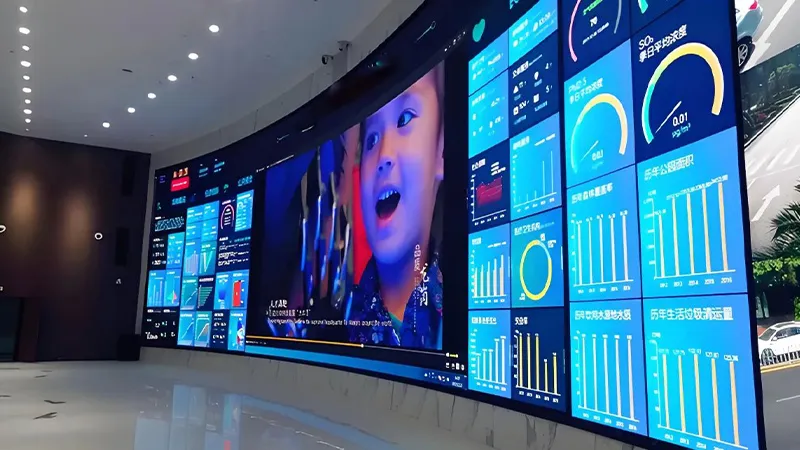
Growth of the Virtual Production Market
The fine pixel pitch LED display is becoming a core component of the virtual production industry, offering realistic visual effects with minimal latency. These LED displays are widely used to create immersive backdrops for movies, TV, and virtual reality (VR) and more to improve the overall quality of the work. This trend will continue to accelerate as more content creators seek to reduce production costs.
Increase in outdoor environmental applications
Traditionally, fine pixel pitch LED displays have been mainly used in indoor scenes due to their delicate structure and sensitivity to environmental factors. However, with the improvement of waterproof, dustproof and brightness levels, such LED displays are beginning to find more applications in outdoor environments. This opens up new development opportunities in areas such as outdoor advertising, public information displays and sports venues.
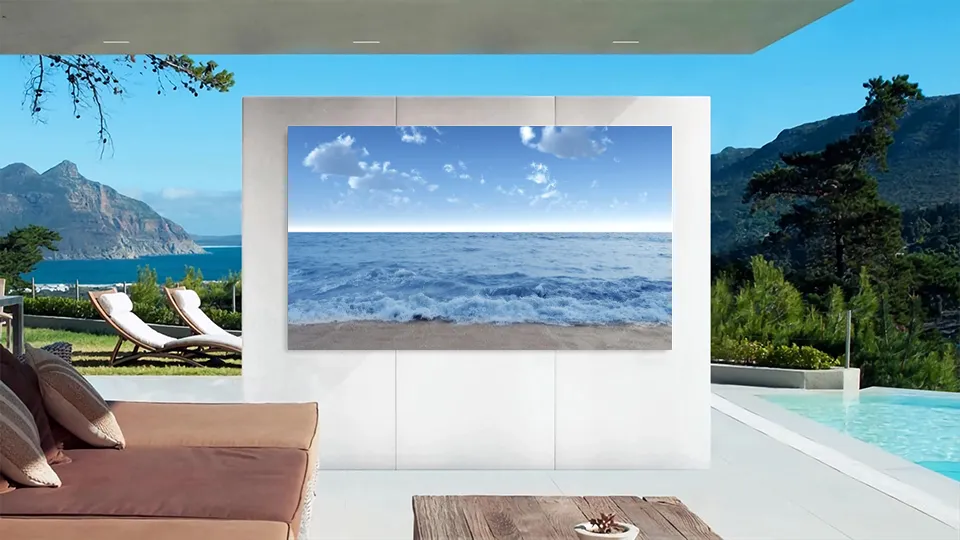
Technical challenges facing fine pixel pitch LED display
Manufacturing Precision and Yield Rates
As the pixel pitch of fine pitch LED displays continues to shrink, maintaining high manufacturing accuracy becomes increasingly challenging. Even small positional deviations in LED components can lead to noticeable defects on the display. In addition, the smaller the pixel pitch, the lower the production yield, which not only increases production costs, but also limits large-scale production. Overcoming these challenges requires continued investment in high-precision manufacturing equipment and rigorous quality control processes.
LED display heating problem
In large-scale applications, the large amount of heat generated by fine pitch LED displays requires effective thermal management to prevent overheating. Overheating can lead to a decrease in image quality and shorten display life. Therefore, new cooling technologies and materials that can dissipate heat more efficiently will need to be developed in the future without compromising the compactness and aesthetics of the display.
Cost and Market Competition
Due to the complex materials and technologies involved in fine pixel pitch LED displays, their production costs are relatively high. Finding a balance between performance and cost, especially in an increasingly competitive market, has become an important challenge for manufacturers. By improving mass production technology or making breakthroughs in materials science, it is possible to achieve cost reduction without reducing quality.

Conclusion
The future of fine pixel pitch LED displays is full of opportunities, accompanied by a number of exciting trends: the increase in resolution, the convergence of AI, the growth of the virtual production market, and the increase in outdoor applications will all drive the industry forward. However, to achieve sustainable development, it is essential to address technical challenges such as manufacturing accuracy, thermal management, and cost-effectiveness. With the continuous advancement of technology, the fine pitch LED display market is expected to further expand its application in various industries and establish its position as a pillar of next generation display solutions.