 Skip to content


LED display technology has come a long way. Whether you’re walking through a mall, catching a game in a stadium, or browsing your favorite store, there’s a good chance you’ve come across an LED display. These panels are everywhere, from huge billboards to sleek little kiosks. But did you know there are different types of LED panels, each designed for specific uses?
In this blog, we’re going to break down the different kinds of LED displays out there and where they work best. Let’s dive in!


Indoor LED Displays: Crystal-Clear for Close-Up Viewing
Best for: Retail displays, control rooms, conferences, and exhibitions.
Indoor LED displays are designed for environments with controlled lighting and closer viewing distances. They feature high-resolution panels that offer vibrant colors and sharp images, making them ideal for settings where clarity and detail are essential.
Key Features:
- High resolution for detailed visuals
- Smooth and bright display
- Often used in digital signage, conference rooms, and retail stores
Where you’ll see them:
Advertising: Perfect for digital signage in stores and malls, offering eye-catching visuals that draw in potential customers.
Corporate Use: Used in boardrooms and conference halls to ensure crisp and professional presentations.
Control Rooms: Essential in mission-critical environments, such as monitoring stations, where information needs to be clearly visible.
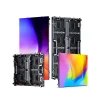
Outdoor LED Displays: Built to Withstand the Elements
Best for: Large-scale advertising, stadiums, transportation hubs.
Outdoor LED displays are engineered to handle all types of weather conditions, offering durability, high brightness, and clarity even in direct sunlight. These displays typically have a lower pixel density (meaning fewer pixels per inch) since they are meant for long-distance viewing.
Key Features:
- Waterproof, dustproof, and weather-resistant (IP65 rating or higher)
- High brightness for visibility in daylight
- Larger pixel pitch for long-range viewing
Where you’ll see them:
Billboards & Digital Advertising: From city streets to highways, outdoor LED displays are perfect for large-scale advertising that needs to be visible from a distance.
Sports Venues: Whether for scoreboards, replays, or live streaming, these panels enhance the spectator experience in arenas and stadiums.
Transportation: Airports, bus stations, and train stations use outdoor LED panels to display schedules, directions, and real-time updates.

Fine-Pitch LED Displays: High Definition for Close Encounters
Best for: Broadcast studios, high-end conference rooms, luxury retail.
Fine-pitch LED displays have an ultra-small pixel pitch, making them ideal for environments where viewers are close to the screen. The smaller the pixel pitch, the higher the resolution and the more detailed the visuals. These panels offer superior image quality, making them perfect for high-visibility applications where detail matters.
Key Features:
- Extremely small pixel pitch (1.0mm to 3.0mm)
- Offers clear, high-definition visuals even at close viewing distances
- Often used in applications requiring high-end visual clarity
Where you’ll see them:
Broadcast Studios: The highest visual clarity is essential in television and media production, making fine-pitch LEDs a common choice.
Corporate Settings: For high-level presentations and video conferences, these displays ensure that every detail is sharp and clear.
Control Rooms: For applications like data visualization and real-time monitoring, high-definition resolution ensures that no detail goes unnoticed.

Transparent LED Displays
Best for: Retail, architecture, art installations.
Transparent LED displays are an innovative solution that allows light to pass through the screen, creating a visually stunning effect without obstructing the view behind the display. These panels are ideal for applications where visibility is crucial, such as storefronts and windows.
Key Features:
Transparent even when powered off
Sleek design that can blend into a variety of settings
Energy-efficient and lightweight
Where you’ll see them:
Retail Environments: Storefronts can use transparent LED displays to showcase advertisements without blocking the view inside, offering a dynamic and interactive experience for shoppers.
Architectural Design: Transparent displays can be integrated into buildings, giving a futuristic look and allowing for digital content to overlay onto physical objects.
Art Installations: Perfect for showcasing digital art or interactive experiences that don’t interfere with the surroundings.

Curved LED Displays
Best for: Large-scale events, exhibitions, entertainment venues.
Curved LED displays provide a unique, immersive viewing experience. Their flexibility allows them to be shaped in almost any form, from cylindrical screens to complex, dynamic setups. These displays are particularly popular in high-impact environments, such as concert stages or immersive event spaces.
Key Features:
- Can be curved into various shapes, from slight curves to full cylinders
- Seamless, visually stunning displays
- Often used for artistic or dynamic displays
Where you’ll see them:
Live Events: For concerts, festivals, and theater performances, curved displays help create an immersive experience for attendees.
Trade Shows & Exhibitions: Ideal for eye-catching displays that draw visitors into interactive or visually stunning installations.
Art & Digital Media: Used for modern art and digital media experiences that require unique screen shapes.
LED Video Walls: Massive Displays for Maximum Impact
Best for: Large venues, control rooms, and public events.
LED video walls are made up of multiple LED panels seamlessly connected to form one large, cohesive display. These massive screens can be customized to meet the size and resolution requirements of virtually any venue.
Key Features:
- Composed of multiple tiles to form a larger display
- High brightness and vibrant color reproduction
- Offers flexibility in terms of size and configuration
Where you’ll see them:
Public Spaces: Used for huge digital signage displays in shopping malls, airports, and stadiums.
Control Rooms: Video walls are often used in control and monitoring stations, where large amounts of data need to be viewed in real-time.
Entertainment & Sports: Massive screens in arenas and concert halls help captivate audiences by broadcasting live events, replays, and advertisements.

Flexible LED Displays: Flex Your Creativity
Best for: Creative installations, custom advertising, automotive design.
Flexible LED displays are a breakthrough technology that allows screens to be bent, curved, or molded to fit any shape. These displays are lightweight, versatile, and perfect for non-traditional installations, making them ideal for applications that require flexibility in design.
Key Features:
- Flexible and can be shaped into curves, cylinders, and other unique designs
- Thin and lightweight
- Offers creative freedom in display design
Where you’ll see them:
Creative Advertising: Flexible screens can wrap around products, buildings, or structures, creating eye-catching, dynamic advertising that’s not bound by traditional rectangular shapes.
Innovative Exhibitions: These displays are perfect for art galleries and exhibitions where traditional rectangular screens just won’t do.
Automotive & Architecture: Custom-shaped displays can be used in vehicles or modern architecture for a futuristic look.
OLED Displays: Rich Colors and Perfect Contrast
Best for: Consumer electronics, luxury displays, mobile devices.
OLED (Organic Light Emitting Diode) displays offer a premium viewing experience with exceptional contrast ratios and vibrant colors. Since each pixel emits its own light, OLED screens provide true blacks and vivid colors, making them ideal for high-end consumer electronics like smartphones, televisions, and wearables.
Where you’ll see them:
- Self-emitting pixels for superior color and contrast
- Ultra-thin and flexible
- Low power consumption and lightweight
Where you’ll see them:
Mobile Devices: From smartphones to smartwatches, OLED displays deliver rich visuals on small screens.
High-End TVs: OLED panels are a favorite for home entertainment enthusiasts due to their unparalleled picture quality.
Wearables & AR Devices: OLED’s ability to be thin and flexible makes it perfect for modern wearables and augmented reality displays.

P6-P10 LED Displays (Outdoor Low-Resolution Panels)
Best for: Large outdoor spaces, roadside advertising, mass communications.
P6 to P10 LED displays have a larger pixel pitch (distance between each LED cluster), meaning they offer lower resolution compared to fine-pitch panels. However, these displays are ideal for outdoor applications where people are viewing the display from a considerable distance. The larger pixel pitch ensures a cost-effective solution for large-scale visual communications.
Key Features:
- Larger pixel pitch (P6 to P10)
- Affordable option for large-scale displays
- Excellent for long-range viewing
Where you’ll see them:
Billboards: Outdoor advertising where fine detail isn’t as necessary, but high visibility is key.
Street Advertising: Placed on highways, large roads, and public spaces for attention-grabbing displays.
Event Signage: For large outdoor events or festivals where high-resolution isn’t critical.
Interactive LED Panels: Engaging Users with Touch Technology
Best for: Digital kiosks, interactive retail displays, public information systems.
Interactive LED panels are equipped with touch-sensitive technology, allowing users to engage directly with the content being displayed. These panels are designed for high interaction and can be found in a variety of public and commercial settings, providing a modern, user-friendly interface for information and service.
Key Features:
- Touch-sensitive functionality
- User engagement with interactive content
- Often embedded with sensors and software for enhanced functionality
Where you’ll see them:
Kiosks: Self-service ticketing, product information, or interactive directories in malls, airports, and museums.
Retail Displays: In stores, allowing customers to interact with products or promotions.
Public Information: Interactive displays for wayfinding in large spaces like airports or city centers.
Conclusion: Choosing the Right LED Display for Your Needs
LED technology offers an incredibly diverse range of display panels, each designed to meet different needs and environments. Whether you’re looking for a high-resolution display for a corporate presentation, a durable outdoor billboard, or an interactive retail kiosk, there’s an LED display that fits your requirements.
With so many options out there, it can be tricky to know which LED display is best for your needs. But once you understand the key differences—whether it’s resolution, durability, flexibility, or interactivity—you’ll be in a much better position to choose the right one.
Ready to take the next step in choosing your ideal LED display? Let us know what type of LED display you’re considering or share your experiences in the comments!