 Skip to content


Massive LED displays aren’t just for flashy billboards or giant sports arenas anymore. They’ve become an integral part of how we experience the world around us. Whether you’re walking through Times Square, catching a game in a stadium, or watching the New Year’s Eve countdown at the Burj Khalifa, these massive screens seem to be everywhere. And it’s not just about size; it’s the clarity, the color, and the tech behind them that really makes these displays stand out.
From ultra-high-definition resolutions to interactive features that make the whole experience feel more immersive. These gigantic screens are constantly evolving. Some are so bright and sharp, they can almost pull you in like a 3D effect. In this article, we’re taking a look at the most jaw-dropping LED displays around the globe, and what makes them so impressive in both size and technology.
The Rise of Massive LED Displays
LED technology has come a long way since its humble beginnings, and the rise of massive LED displays is one of the most exciting chapters in this story. In the early days, LED screens were small and mostly used for things like digital clocks or basic signage. But as technology advanced, so did the scale and capabilities of these displays. Today, we’re seeing LED screens that stretch across entire buildings, fill stadiums, and even span entire city blocks.
The key factor behind this shift is the constant improvement in LED panel technology. Particularly the move from standard displays to more advanced options like MicroLED and OLED. These new types of LEDs offer sharper images, brighter colors, and the ability to create bigger. And more dynamic screens without sacrificing quality.
Along with the technology, the demand for massive displays has grown as well. Cities, sports organizations, and entertainment companies are all in on the trend, recognizing how these giant screens can not only draw attention but also enhance the overall experience for viewers. Whether it’s advertising, live events, or public art, massive LED displays have become a staple in our visual culture.
Top 10 Massive LED Displays Around the World
1. Sphere, Las Vegas, USA
The Sphere at The Venetian Resort in Las Vegas is setting a new standard for entertainment venues. This state-of-the-art arena, which opened in September 2023, is the largest spherical building on Earth. Standing 366 feet(112m) tall and 516 feet(157m) wide, it features a 16K resolution wraparound interior LED screen, capable of offering a fully immersive visual experience like no other venue before it. Add to that the 4D physical effects, beamforming speakers, and wave field synthesis audio technology, and you’ve got an experience that combines high-definition visuals with groundbreaking sound. With a seating capacity of 17,600 (and a total capacity of 20,000), the Sphere has already hosted major events, including a residency by U2, and immersive screenings like a 4D version of The Wizard of Oz. It’s not just a venue; it’s a whole new way to experience live entertainment.

The Sphere in Las Vegas
2. Resorts World, Las Vegas, USA
Resorts World Las Vegas features a massive 100,000-square-foot LED screen, making it the second-largest video screen in the world. Positioned on the south-facing facade of the resort’s West Tower, this impressive display is one of the largest building-integrated screens in the United States. Measuring 294 feet high by 340 feet wide, it consists of over 3,500 transparent mesh LED panels. These panels allow natural light and views for hotel guests behind them while delivering vibrant digital content that’s visible from miles away.
The screen showcases everything from promotions and advertisements to immersive multimedia shows, lighting up the Las Vegas Strip with stunning visuals. In addition, a smaller 19,000-square-foot LED screen adorns the East Tower, ensuring that no matter where you’re standing, the digital spectacle is always in view.

Resorts World Las Vegas
Source: https://www.rwlasvegas.com/
3. Fremont Street Experience, Las Vegas, USA
The Viva Vision canopy at the Fremont Street Experience in downtown Las Vegas is the world’s largest LED canopy screen, forming a massive overhead video display that transforms the historic pedestrian mall into an immersive light and sound spectacle.
Spanning 1,375 feet long and 90 feet wide (approximately 130,000 square feet), it is suspended 90 feet above the street and features over 49.3 million energy-efficient LED lamps powering 16.4 million brilliant pixels. Upgraded in a $32 million renovation completed in 2019-2020, the screen is four times sharper and seven times brighter than its predecessor, with a brightness of 5,000 Nits allowing shows even in daylight. Whether it’s synchronized light shows or immersive music visuals, the Viva Vision canopy is a key centerpiece of the Fremont Street Experience, making it a must-see attraction in Las Vegas.
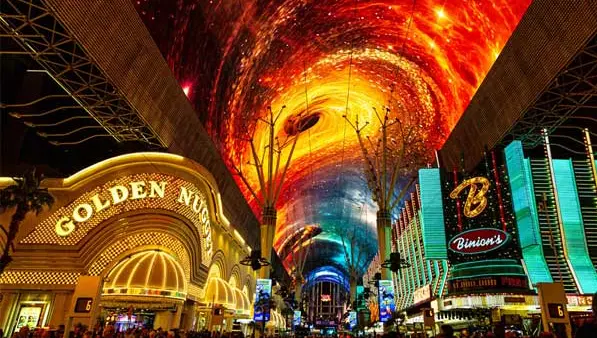
The Viva Vision canopy at the Fremont Street Experience
Source: https://vegasexperience.com/
4. Mall Taman Anggrek, Jakarta, Indonesia
Mall Taman Anggrek in Jakarta is home to one of the world’s longest architecturally integrated LED media facades, wrapping around the exterior of the mall. Measuring approximately 354 meters long and 25 meters high, this impressive display covers 8,675 square meters (93,380 square feet) and is made up of over 8.5 million LEDs, divided into high- and low-resolution zones.
Once holding the Guinness World Record for the largest illuminated LED facade (achieved in 2012), the screen continues to be a key feature of the mall. It displays vibrant advertisements, animations, and promotions, turning the mall into a glowing landmark at night and making it a striking sight visible to commuters and pedestrians alike.

Mall Taman Anggrek
Source: https://www.taman-anggrek-mall.com/
5. The Place, Beijing, China
The Place shopping mall in Beijing is famous for its massive LED sky screen canopy, one of Asia’s largest overhead displays. Spanning 250 meters long and 30 meters wide (around 7,500 square meters or 80,729 square feet), this striking screen features thousands of LED lights that create immersive digital animations, advertisements, and light shows.
Located above the open-air courtyard, the canopy offers stunning visuals visible from below, turning the area into a dynamic space filled with vibrant colors and energy. Often described as a “futuristic cyberpunk” spectacle, the screen hosts hourly shows with themes ranging from oceans and stars to bustling cityscapes, providing an ever-changing visual experience for visitors.

The Place, Beijing, China
Source: https://airial.travel
6. M+ Facade, Hong Kong, China
The M+ Museum, located in Hong Kong’s West Kowloon Cultural District, features an eye-catching LED-integrated facade on its harbor-facing side, making it one of the world’s largest media art displays. Measuring 65.8 meters high by 110 meters wide (approximately 7,238 square meters), the facade is composed of over 5,600 wide- and narrow-beam LEDs embedded in horizontal louvers.
The screen is used to showcase curated moving image works, commissioned pieces, and selections from the museum’s collection, creating a dynamic blend of architecture and digital art. The facade lights up nightly, visible from across Victoria Harbour, transforming the museum into a spectacular visual experience that merges modern technology with artistic expression.

M+ Facade, Hong Kong, China
Source: https://www.scmp.com/
7. SoFi Stadium, Inglewood, USA
SoFi Stadium in Inglewood, California, is home to the groundbreaking Infinity Screen (formerly known as Oculus), which holds the title of the world’s largest double-sided center-hung video board. Spanning 70,000 square feet and featuring nearly 80 million LEDs, this oval-shaped 4K display is suspended from the roof of the stadium, offering immersive views from every seat.
The screen is divided into inner panels for the lower bowl and outer panels for the upper bowl, ensuring that every fan gets a front-row view of the action. It delivers real-time action, replays, and graphics, all enhanced by a sound system with over 260 speakers, providing an unparalleled stadium experience.

SoFi Stadium’s LED screens
Source: https://www.sofistadium.com/
8. Citigroup Tower, Shanghai, China
The Citigroup Tower in Shanghai features one of the most impressive LED facade displays in the city, covering an area of approximately 6,000 to 6,500 square meters. This massive screen is used primarily for branding and advertisements, transforming the building’s exterior into a dynamic digital canvas. The display is visible from miles around, adding to Shanghai’s already stunning skyline.
Note: While the Citigroup Center in New York City is iconic for its slanted roof and aluminum cladding, it does not feature a notable LED video wall or digital facade.

The Citigroup Tower in Shanghai
9. Mexico City Arena (Arena Ciudad de México), Mexico City, Mexico
Arena Ciudad de México features one of the world’s largest outdoor LED facades, spanning approximately 6,200 square meters (66,736 square feet) on its curved exterior. This massive screen wraps around much of the building, showcasing vibrant promotions, event visuals, and dynamic content that draws the attention of passersby and enhances the atmosphere for concertgoers and sports fans alike.
In addition to the outdoor facade, the arena also boasts an impressive indoor center-hung screen, making it a key visual element for the 22,300-capacity venue during events and performances.

Mexico City Arena (Arena Ciudad de México)
10. Mercedes-Benz Stadium, Atlanta, USA
Mercedes-Benz Stadium is home to the iconic Halo Board, a groundbreaking 360-degree circular video display that wraps around the retractable roof opening. Measuring 58 feet tall with a 1,075-foot circumference (approximately 62,350 square feet), the Halo Board is one of the largest and most innovative in-stadium displays in the world.
Installed by Daktronics, this massive screen provides seamless views for all fans, delivering replays, stats, and immersive graphics in ultra-high definition. It truly redefines the in-stadium experience, allowing fans to stay connected to the action no matter where they’re seated.

Mercedes-Benz Stadium
Source: https://www.mercedesbenzstadium.com/
Unbelievable Tech: Innovations in Massive LED Displays
The evolution of massive LED displays isn’t just about size. It’s also about the incredible technology that powers them. As the displays get bigger, the tech behind them becomes more advanced, offering features that were once unimaginable. From ultra-high resolutions to interactive capabilities, let’s take a closer look at the groundbreaking innovations in LED technology. Which are transforming how we experience visual content.
MicroLED Technology
One of the most exciting developments in the world of LED displays is MicroLED technology. Unlike traditional LEDs, which require backlighting. MicroLEDs are self-emissive, meaning each individual pixel emits its own light. This results in deeper blacks, higher contrast ratios, and vibrant colors that make the image pop even more. Additionally, MicroLED displays can be scaled up without losing image quality. Making them perfect for massive displays like those found in stadiums and public spaces.
Flexible & Curved Displays
Gone are the days when LED screens had to be flat and rigid. With the rise of flexible and curved LED displays, we’re seeing new possibilities in architecture, design, and entertainment. These displays can be wrapped around structures, seamlessly curving to fit any shape, from circular arenas to multi-level facades. For example, the Sphere in Las Vegas features curved, spherical LED screens, providing an entirely immersive viewing experience. Flexible LED screens also offer greater durability, making them ideal for high-traffic areas and outdoor installations.
Transparent LED Displays
Imagine a digital window that lets you see both the world outside and dynamic content on the glass itself. Transparent LED displays are a game-changer in this area. These displays are made from transparent panels embedded with tiny LEDs that allow light to pass through while still showing high-quality visuals. They’re already being used in retail stores, airports, and even public transportation systems. The beauty of transparent LEDs is that they can transform everyday glass surfaces into advertising and information hubs without blocking views or natural light.
Interactive & Augmented Reality Integration
The future of LED displays isn’t just about watching — it’s about interacting. Advances in Augmented Reality (AR) and motion sensors are bringing interactivity to large-scale screens. Imagine walking past a massive screen and seeing your movements reflected in real-time, or interacting with content through gestures. Some modern LED displays in shopping malls or entertainment venues are already incorporating AR to create immersive, engaging experiences that go beyond passive viewing. This technology creates a sense of connection with the audience, allowing them to become a part of the show.
8K and Beyond
While 4K resolution was the standard for high-definition displays, 8K resolution is quickly becoming the new frontier. With 16 times the pixel count of Full HD and four times that of 4K, 8K displays offer ultra-crisp detail that’s hard to match. While 8K content is still limited, massive screens like those at the Sphere are capable of displaying 8K visuals, offering stunning clarity that makes the experience feel almost real. With each passing year, the push for even higher resolutions — such as 16K or beyond — is becoming a reality, providing audiences with richer and more immersive experiences.
AI & Machine Learning Integration
Artificial Intelligence (AI) and Machine Learning are also starting to play a major role in LED displays. These technologies help improve image quality by automatically adjusting brightness, contrast, and color to suit different environments. For instance, AI-powered algorithms can optimize LED content in real-time based on factors like ambient light, making sure the display always looks its best, whether it’s day or night. In addition, machine learning is used to predict and manage content flow, providing more personalized and dynamic viewing experiences.
The Future of LED Technology
As impressive as today’s massive LED displays are, the future promises even more mind-blowing advancements. With the rise of AI, 5G networks, and next-gen graphics processing, we’re likely to see even smarter, more interactive displays that blur the line between the physical and digital worlds. From holographic displays to LED walls that respond to touch, the next generation of displays will only push the boundaries of what’s possible.
Additionally, as the world moves toward more sustainable tech, future LED displays will likely focus on energy efficiency and environmental friendliness. Expect innovations in materials and power-saving technologies that ensure these giant displays are as green as they are awe-inspiring.